Data article from ExporterIQ. UK trade figures for 2025, in US dollars.
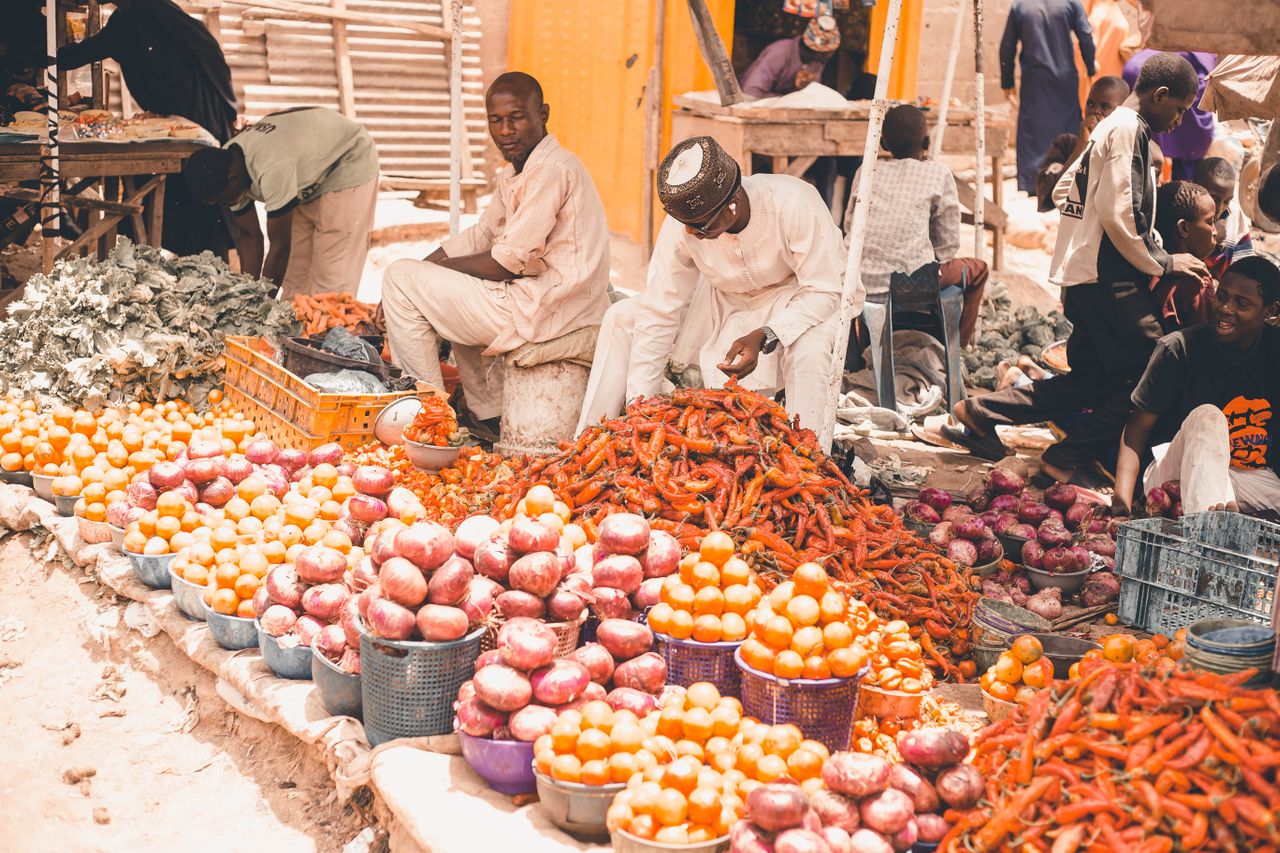
When people talk about Ghana's exports to the UK, they talk about cocoa. The figures say there is a second story. In 2025 the UK bought $366.0m of goods from Ghana, up from $250.7m in 2024. Cocoa is the biggest line. But four other food lines, taken together, are worth more than cocoa.
The picture in 2025
Cocoa products made up the largest share. Cocoa paste was $87.7m (24% of the total) and cocoa beans were $69.9m (19%), together $157.6m, or 43%.
Behind cocoa, the next four lines add up to $163.8m, about 45% of everything the UK bought from Ghana:
- Prepared or preserved fish: $72.8m (20%)
- Fresh or dried mangoes, pineapples, avocados and similar fruit: $51.5m (14%)
- Bananas and plantains: $23.5m (6%)
- Cassava, sweet potato and other starchy roots: $16.0m (4%)
These four lines are all food. None of them is cocoa, and the UK already buys them from Ghana in quantity.
What each line tells an exporter
Prepared or preserved fish ($72.8m). This is the second biggest line overall, bigger than cocoa beans. The customs heading covers fish that has been prepared or preserved, not fresh fish, so it points to processors and canners as the suppliers. For an exporter, the market is a processed product with a buyer who expects consistent quality and paperwork.
Mangoes, pineapples, avocados and similar fruit ($51.5m). One customs heading covers dates, figs, pineapples, avocados, guavas, mangoes and mangosteens, fresh or dried, so the total does not say how much of it is mango and how much is pineapple. Fresh and dried fruit are traded to different buyers: fresh goes to importers and supermarkets, dried goes to snack, cereal and bakery makers.
Bananas and plantains ($23.5m). The heading covers both. Plantain is a staple for African and Caribbean households in the UK, which makes this a steady market with identifiable buyers.
Cassava, sweet potato and other starchy roots ($16.0m). The smallest of the four, but notable because it is a root crop, a product people rarely think of as an export. These are ingredients for communities and food makers who already buy them.
A wider catalogue than it looks
In 2025 the UK imported 172 different products from Ghana. Cocoa and these four lines are most of the value, but the range is broad. The UK also bought vegetables preserved for later processing, and goods classed only as "commodities not specified by kind" ($9.6m), which shows that some trade does not fit the usual headings.
What the figures do not say
Three limits are worth stating.
- The total is below its 2022 level. UK imports from Ghana were $784.6m in 2022, fell to $353.9m in 2023 and to $250.7m in 2024, then recovered to $366.0m in 2025. The 2025 rise is a recovery, not a record.
- The headings are broad. A single customs heading can cover several products, so a line like "fruit" or "fish" is a group. To find the real market for one product, look at its own heading.
- These are values, not volumes or prices. They show how much the UK spent, not how many tonnes arrived or what each tonne cost.
The figures are the UK's own reported imports, from the United Nations trade database, in US dollars.
If you export food ingredients from Ghana
These are lines the UK already buys, so the question is not whether there is demand but who the buyers are and what they require.
- Start with the heading, not the product name. Find the customs code for what you sell, then look at what the UK imports under it.
- Check the buyers. Know who is importing in your category before you approach them, and confirm they are real, registered businesses.
- Check your market access. Goods from Ghana enter the UK under the UK-Ghana Trade Partnership Agreement, which gives duty-free, quota-free access. Confirm that your product meets the rules of origin, the plant-health or food-safety requirements for its category, and has the right certificates before you ship. The details are in the sections below.
Tariffs, quotas and rules of origin
Ghana's goods enter the UK duty-free and quota-free. Under the UK-Ghana Interim Trade Partnership Agreement the UK gives "immediate duty-free, quota-free access to goods exported from Ghana", and the official guidance names no quota on Ghanaian goods.
The zero tariff applies only to goods that qualify as Ghanaian. A product qualifies if it is wholly obtained in Ghana, or sufficiently processed there under the product-specific rule for its customs code. Check the rule for your code in the agreement text before you quote a duty-free price.
Rules and restrictions on food ingredients
A zero tariff does not mean free entry. Food and plant products must still meet UK health and plant-health rules.
Fruit, vegetables and roots. Great Britain sorts plant produce into risk categories: high risk, medium risk A, medium risk B and low risk. Low-risk goods are exempt. For the rest:
- Each consignment needs a phytosanitary certificate from Ghana's plant health authority, the Plant Protection and Regulatory Services Directorate of the Ministry of Food and Agriculture. The certificate must be issued no more than 13 days before or after the consignment leaves Ghana.
- For high-risk and medium-risk A goods, the UK importer must notify the authorities in advance: at least 4 working hours for air and roll-on roll-off freight, and 1 working day for other freight.
- High-risk and medium-risk A goods must enter through a border control post that handles plants, where officials check the documents, the identity of the goods and their physical condition.
- Medium-risk B goods need the certificate and wood packaging that meets the ISPM 15 standard, but no advance notice.
The guidance for exporting fruit and vegetables from Africa gives examples: avocados, fresh chillies and cassava need a phytosanitary certificate. Fresh mango, dried fruit, spices and palm oil do not. Pineapples, bananas and yams are not named in the guidance we reviewed, so check their category on the UK Plant Health Information Portal.
Fish. Fish and fishery products have their own rules. Wild-caught fish needs a catch certificate under the UK's illegal, unreported and unregulated (IUU) fishing rules, and prepared fish must come from an approved establishment with an official health certificate. Confirm the current requirements for your product on GOV.UK before you sign a contract.
What is not accepted
- Consignments without the right paperwork. A missing or late phytosanitary certificate, or a missing advance notice, delays or stops the goods.
- Goods that fail inspection. An inspector can order a failed consignment destroyed or returned.
- Prohibited plant goods. Some plant produce cannot enter Great Britain if it cannot meet the import requirements, unless a scientific authorisation applies. In 2016 the UK and EU suspended imports of some Ghanaian vegetable plant produce, including peppers, aubergines and bitter gourds, after finding shortcomings in Ghana's export system. Check the current status before you plan a shipment of any of these.
- Goods that do not qualify as Ghanaian. They pay the normal UK tariff, not zero.
Fees apply. A documentary check on a phytosanitary certificate costs £5.25 in England and Wales, and identity and physical checks cost more.
Is Ghana planning to export more?
Yes, and its stated route is processed goods, not raw ones. Ghana's non-traditional exports, meaning everything outside gold, cocoa and oil, passed $5 billion in 2025, according to the Ghana Export Promotion Authority (GEPA). Its 2026 priorities are:
- More products and markets, with deeper use of the African Continental Free Trade Area.
- Value addition, especially agro-processing and manufacturing, to earn more per tonne and rely less on raw commodities.
- Support for exporters: help to scale production and meet international standards, trade fairs, market intelligence, and training for small and medium businesses.
GEPA has published no numerical target for 2026. For an exporter, the direction is clear: processed fish, prepared fruit and packaged ingredients are the lines Ghana is promoting, and they are the lines the UK data above already shows it buying.
See the numbers for your product
ExporterIQ shows, for each product, which countries buy the most, how each market is growing, and the UK companies active in that product group.
- The UK and Ghana corridor, with the full list of products traded both ways
- Market finder, for the countries buying your product
Source: UK import figures for 2022 to 2025 as reported to the United Nations trade database (Comtrade), in US dollars. Shares are of total UK imports from Ghana.
Sources
- Trade with Ghana, GOV.UK for the UK-Ghana Interim Trade Partnership Agreement, duty-free and quota-free access, and rules of origin.
- Import plants and plant products from non-EU countries to Great Britain, GOV.UK for risk categories, certificates, advance notice, inspection and fees.
- Exporting fruit and vegetables from Africa to Great Britain, GOV.UK for the examples of produce that need a certificate.
- Export diversification and market expansion key to 2026 outlook, Citi Newsroom (20 April 2026) for GEPA's 2025 export figure and 2026 priorities.
- UK extends import ban of plant products originating in Ghana, Hortidaily for the 2016 suspension on some vegetable plant produce.
Written by Andre Biyog, ExporterIQ.