
Vietnam’s Halal-Certified Food Exports Surge as Global Muslim Market Expands
As Việt Nam accelerates its export diversification strategy, the Halal economy is emerging as one of the most promising growth pillars.
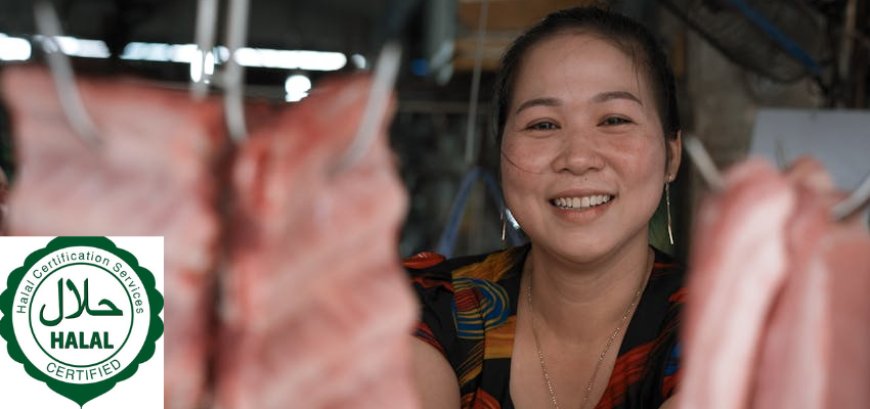
Vietnamese agricultural and food products are securing Halal certification at a rapidly increasing pace, a shift that is unlocking major opportunities for Việt Nam to enter the booming global Muslim consumer market.
As Việt Nam accelerates its export diversification strategy, the Halal economy is emerging as one of the most promising growth pillars. This aligns with the country’s long-term vision of sustainable trade expansion and reduced reliance on traditional markets.
A US$5 Trillion Halal Economy by 2030
Global organisations estimate that the Muslim population now exceeds two billion people, representing around 25% of the world’s population. By 2030, the Halal economy is forecast to reach nearly US$5 trillion, covering:
- Food and beverages
- Cosmetics and personal care
- Pharmaceuticals
- Logistics and cold-chain services
- Tourism and hospitality
- Islamic finance and investment
The Halal market has evolved far beyond religious compliance. Today, it is a mainstream global consumer segment where traceability, ethical production, transparency and quality assurance are essential. Notably, many non‑Muslim consumers now view Halal certification as a mark of safety and sustainability.
With strengths in tropical agriculture, food processing and participation in next‑generation FTAs, Việt Nam is well-positioned to build a competitive Halal industry. But to convert potential into real market share, Halal must be treated as a national development strategy, not just a certification exercise.
Vietnamese Firms Move Toward High-Value Halal Production
More Vietnamese companies are now approaching the Halal market strategically. HR Essence Co., Ltd recently obtained Halal certification for several products, including coffee, cereals and premium bird’s nest cereals, through the National Halal Certification Centre.
Chairwoman Hương Nguyễn emphasises that entering the Halal market requires a complete restructuring of the value chain, from raw material sourcing and production processes to branding and market access. In her view, Halal is a catalyst that pushes businesses to elevate governance, standardise operations and invest in intrinsic product value.
The National Halal Certification Centre notes that Vietnamese Halal goods are shifting from contract manufacturing to higher value-added, brand-driven products with strong traceability.
Shortly after certification, HR Essence exported its first shipment to Malaysia, one of the world’s most demanding Halal markets.
Malaysia: A Strategic Gateway for Vietnamese Halal Exports
Malaysia plays a central role in the global Halal ecosystem. With Muslims making up more than 60% of its population, the country aims to become a global Halal hub by 2030, targeting a Halal GDP of US$58.5 billion (around 11% of national GDP).
Malaysia is also recognised for maintaining one of the world’s most rigorous Halal certification systems. Gaining access to this market is therefore a strategic milestone, enabling Vietnamese products to expand into the Middle East, South Asia and other Muslim-majority regions.
A representative of the Malaysian Embassy in Việt Nam noted that the rising number of Vietnamese Halal-certified products is creating new opportunities for bilateral cooperation, not only in trade but also in regional Halal supply chain development.
Key Challenges for Vietnamese Businesses
According to the Việt Nam Trade Office in Malaysia, the biggest challenge for Vietnamese firms is not product quality but their ability to integrate into the Halal ecosystem.
Major barriers include:
Certification complexity: Malaysia’s Halal standards require a deep understanding of Sharia principles, technical criteria and local consumer culture.
Market access requirements: While not legally mandatory for all products, Halal certification is often essential for entry into modern retail systems.
Cultural alignment: Packaging, labelling and brand messaging from Vietnamese producers often fail to resonate with Muslim consumers.
Regional competition: Thailand, Indonesia and China have already implemented national Halal strategies, giving them a head start.
These challenges highlight that Halal is not a market businesses can enter spontaneously. It requires coordinated action across government agencies, industry associations, certification bodies and enterprises.
Building a National Halal Strategy for Long-Term Growth
Việt Nam’s National Halal Certification Centre, recognised by Malaysia, is a major institutional advantage. To maximise its impact, the centre should expand beyond certification to include:
- Strategic advisory services
- Training and capacity building
- Market intelligence and connectivity
- A national Halal product database
For businesses, Halal must be treated as a long-term strategic direction, not a temporary response to export difficulties. This requires investment in:
- Market research
- Product redesign
- Supply chain standardisation
- Ethical and sustainable brand-building
At the national level, Halal should be integrated into trade promotion programmes, high-value agricultural development strategies and Việt Nam’s broader global branding efforts.
Halal: A New Competitive Arena for Vietnamese Exports
Halal is not simply a certificate; it is a competitive arena where only companies with strong governance, strategic vision and sustained commitment will thrive. As global demand accelerates, Việt Nam has a rare opportunity to position itself as a trusted supplier of high-quality Halal products to Muslim and non‑Muslim consumers worldwide.









Comments (0)